
10 Web Design Trends Businesses Can’t Ignore in 2026
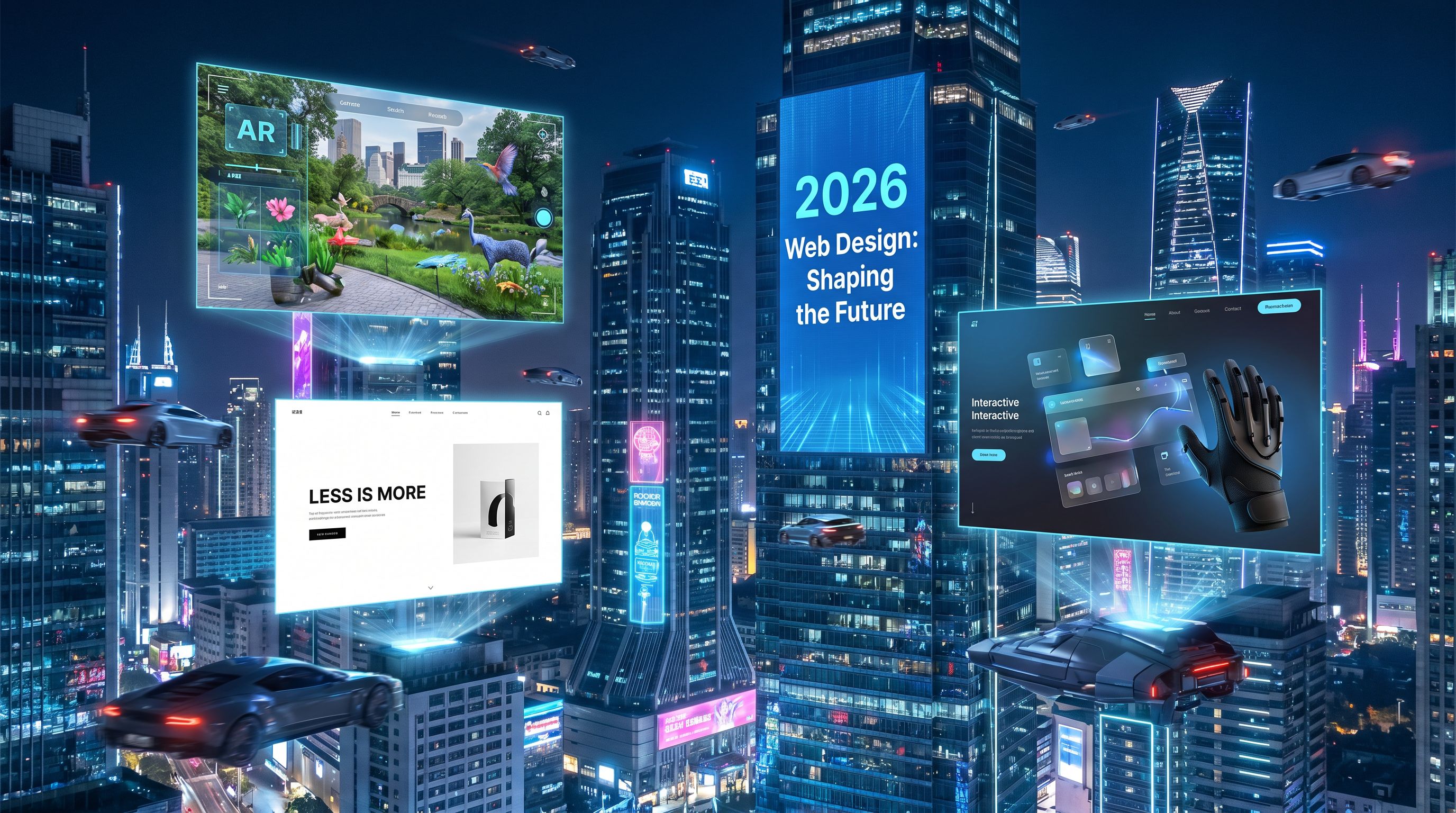
Introduction
As we approach the year 2026, the digital landscape is set to undergo a transformative shift in how businesses present themselves online. Web design trends are evolving at a rapid pace, driven by advancements in technology, changing user preferences, and the need for more engaging and interactive experiences. For businesses to remain competitive and relevant, it’s crucial to keep up with these developments. Here are 10 web design trends that businesses cannot afford to ignore in 2026.
1. Enhanced Mobile Experiences
With mobile usage continuing to soar, businesses must prioritize mobile-optimized designs. This includes responsive layouts, touch-friendly interfaces, and fast loading times. The focus will be on creating seamless, intuitive experiences that cater to the on-the-go consumer.
Practical Tip:
Invest in responsive web design to ensure your website looks good and functions well across all devices.
2. Voice User Interface (VUI) Design
Voice technology is becoming more sophisticated, and web design must adapt to accommodate voice commands and interactions. This trend will require businesses to think beyond the traditional keyboard and mouse, integrating voice recognition and natural language processing into their web design.
Practical Tip:
Consider implementing voice search capabilities to enhance user interaction and accessibility.
3. Virtual Reality (VR) and Augmented Reality (AR) Integration
VR and AR are no longer just for gaming; they are finding their way into web design, offering immersive experiences that can engage users like never before. From virtual showrooms to interactive product demonstrations, these technologies are set to redefine user engagement.
Practical Tip:
Explore partnerships with AR/VR developers to create unique, interactive experiences for your customers.
4. Personalization and AI-driven Experiences
Artificial intelligence will play a significant role in web design, powering personalized experiences based on user behavior, preferences, and past interactions. This can lead to tailored content, recommendations, and a more intuitive navigation experience.
Practical Tip:
Leverage AI to analyze user data and personalize content, making your website feel more relevant and engaging.
5. Dark Mode and Accessibility
Dark mode has gained popularity for its aesthetic appeal and energy-saving benefits. In 2026, we can expect dark mode to become a standard feature, alongside increased focus on accessibility to cater to users with disabilities.
Practical Tip:
Implement a dark mode option and ensure your website meets WCAG accessibility guidelines to broaden your audience reach.
6. Minimalist and Clean Design
Cluttered interfaces will be a thing of the past as minimalist design trends continue to dominate. The focus will be on clean lines, ample whitespace, and a clear hierarchy that makes content easy to digest.
Practical Tip:
Simplify your website layout and prioritize the most important information to create a clean, user-friendly experience.
7. Interactive and Animated Elements
Static websites are becoming a rarity as interactive and animated elements take center stage. These elements can guide users through the site, provide visual feedback, and make the overall experience more engaging.
Practical Tip:
Incorporate subtle animations and micro-interactions to enhance user experience without overwhelming the user.
8. Sustainable Web Design
With growing environmental concerns, sustainable web design will become a priority. This includes optimizing for faster load times, using less resource-intensive animations, and making ethical choices in digital materials.
Practical Tip:
Optimize your website for performance and sustainability to reduce its environmental impact and improve user satisfaction.
9. 3D Graphics and Interactive Models
3D graphics will enhance visual appeal and provide a more immersive experience. Interactive 3D models can be particularly useful for e-commerce, allowing users to explore products from all angles.
Practical Tip:
Consider using 3D graphics and models to showcase products or services in a more engaging way.
10. Emphasis on Security and Privacy
As cyber threats continue to evolve, businesses must prioritize web security and privacy. This includes using HTTPS, implementing robust data protection measures, and being transparent about data usage.
Practical Tip:
Regularly update your website’s security protocols and clearly communicate your privacy policy to build trust with users.
Conclusion
Staying ahead of the curve with web design trends is essential for businesses looking to maintain a competitive edge in 2026. By embracing these trends, businesses can provide better user experiences, improve conversion rates, and build stronger relationships with their audience. Pelita Studio, a digital agency with expertise in web development and digital advertising, can help you navigate these trends and create a business website that not only meets but exceeds the expectations of the future digital landscape.